

Crucial for RF Circuit Board Design
The PCB is the core of a circuit, but when it comes to Rf circuit board design, there are many factors that play a critical role. These include the type of materials used to make the PCB, as well as proper placement and component layout to maximize performance and minimize interference. In addition, proper grounding and decoupling are crucial for ensuring effective signal transmission and minimizing electromagnetic interference (EMI) and cross-talk.
The choice of material for a PCB is crucial for RF circuits, as high frequencies generate significant heat that can affect the stability and performance of the material. Several factors, including moisture absorption, dielectric constant, thermal expansion, and cost must be considered when selecting a material for RF PCBs. For example, FR-4 is a common material for standard electronics because it offers excellent mechanical properties and is relatively inexpensive. However, FR-4 has a high dielectric constant and loss tangent, which makes it unsuitable for RF applications. High-performance materials like polytetrafluoroethylene (PTFE) and Rogers material offer superior high-frequency performance, but these options come at a premium in terms of cost.
RF PCBs are often designed to utilize integrated passive components, which reduce the number of external devices needed to complete an electronic circuit. This can help decrease circuit size and weight, reduce manufacturing costs, and improve reliability. In addition, integrated passive components can increase efficiency by allowing for shorter interconnects between circuit elements.
As a result, a trend towards integrating active and passive components directly onto the PCB itself is gaining popularity in rf circuit board design. This method allows designers to save space and time, while improving overall design quality.
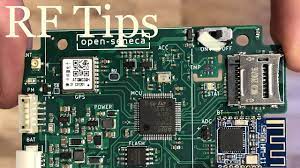
What Materials Are Crucial for RF Circuit Board Design?
A high-frequency PCB is prone to EMI and cross-talk, which are caused by electromagnetic interference (EMI) and differential voltages. To minimize these issues, the designer must use a shielding technique that includes copper traces and ground planes. The designer should also take care to place components with adequate spacing and minimize heat buildup.
Proper placement of RF and non-RF components is also crucial for optimal performance. The RF circuit must be separated from other circuits to prevent interference, and the grounding must be properly established using either vias or stitching techniques. In addition, the RF circuit must be decoupled from the power supply to decrease noise transference.
Another important consideration when designing a RF circuit is the choice of antenna size. The right antenna will improve signal strength and allow for better transmission. It is also important to ensure that the antenna is positioned in a convenient location for installation and maintenance.
Other important considerations for RF circuit board design are proper thermal management, power supply decoupling, and impedance matching. RF circuits must be designed to dissipate heat efficiently to prevent overheating, which can lead to degradation of performance and shorten the lifespan of the circuit. In addition, the impedance matching process must be carefully monitored to ensure that the characteristic impedance of transmission lines remains constant throughout the frequency range.