

role of adhesives in flexible PCB fabrication
Almost every component of a flexible circuit board requires an adhesive to bind it to the rest of the structure. As a result, the choice of adhesive is crucial in the manufacturing process. The right material can provide flexibility, thermal stability, mechanical strength, and other features essential to a successful product. This article explores the role of adhesives in flexible PCB fabrication, providing a detailed overview of how manufacturers use them to build these versatile components.
In general, the main function of an adhesive is to bond a film substrate to another piece of material. Generally, this is done with either an epoxy or acrylic glue. Both of these materials are widely used in flexible pcb fabrication, each with their own unique characteristics. Acrylic adhesives are less rigid than epoxy, which makes them a popular choice for applications that require dynamic bending. However, they can also lose their adhesion over time if exposed to high temperatures. This is a significant disadvantage of this type of adhesive, as it can cause copper migration and affect the performance of the final flexible circuit board.
As a result, if you need to use an acrylic adhesive for your project, you should pay attention to the temperature and press conditions when pressing the components. This can help prevent deterioration of the adhesive and ensure that your finished product has good durability and reliability.
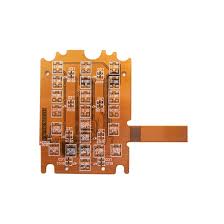
What is the role of adhesives in flexible PCB fabrication?
The main conductor material for a flexible PCB is copper foil. It is available in two forms: rolled annealed (RA) and electro-deposited (ED). RA copper has better workability, while ED copper has improved electrical properties. In addition to copper, a flex circuit can be built with insulating layers like polyimide or polyester.
These insulating materials are commonly used in a flexible circuit’s outer layer, as they provide structural support and shielding. In most cases, they are bonded to the copper using an acrylic or epoxy adhesive. In some cases, these insulating materials are laminated with stiffeners to create a more rigid structure for the PCB. Stiffeners can be bonded to the core of a flexible PCB with heat and pressure, or with an adhesive. The choice of the method depends on the design requirements of the project and the thickness of the insulating material.
The insulating and stiffening materials for a flexible PCB are typically bonded to the core with a heat and pressure thermal bonding method. This is preferred because it provides the best combination of strength and flexibility, while still allowing for easy component placement. This type of bonding is favored by many PCB manufacturers, as it can be completed quickly and easily, without the need for additional processing steps.
Some flexible circuits need to be bounded to other components, such as a flex PCB’s solder mask or coverlay. Manufacturers previously used adhesives to glue these layers together, but this method reduced the reliability of the resulting product. To avoid this issue, they now attach these layers to each other with the same type of heat and pressure that they use to make the bond between the flex and the stiffener.