

Electric Circuit Board and What Is Its Main Function
A circuit board is a flat piece of material that holds and connects electronic components using electrically conductive pathways. It is one of the most important inventions that heralded the onset of modern technology, and it plays a key role in ensuring the proper functioning of many devices. It is also essential for preventing damage to the different components in our gadgets, as well as protecting them from power surges.
The circuit board, also known as a PCB, is the foundation of all electronic devices. It is a piece of printed circuitry that has copper lines, or traces, that connect all the electronic components. These traces act like wires and are used to transmit electricity to the correct destination. Compared to bulky wiring, the traces in a circuit board are more compact and more reliable. They also make it easier to repair and upgrade electronic devices.
Whether you’re a beginner in the electric circuit board industry or an experienced professional, it can be challenging to understand all the components that comprise a circuit board and their functions. The various parts are tasked with doing different things and are crucial in determining how the device works.
To help you learn more about the circuit board, we have compiled a list of some of its most important components and their specific tasks. Some of these include resistors, capacitors, diodes, and transformers.
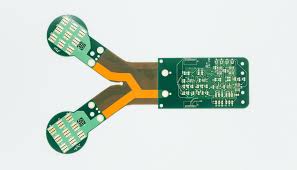
What Is an Electric Circuit Board and What Is Its Main Function?
The resistors on a circuit board are tasked with making sure that electricity doesn’t flow through it too fast. They do this by slowing down the flow of electricity, thereby preventing overheating and ensuring that all the electrical components in the circuit board are adequately powered.
On the other hand, capacitors store a small amount of electrical charge. They can be found on most electronic devices, and they are able to keep electricity flowing even when the device is turned off. This is because they do not lose their electric charge when the circuit is not in use.
Another significant component found on a circuit board is the transistor, which is responsible for amplifying the voltage that comes from the batteries in your gadget. Transistors have three locations that resemble pins on the end of the component, and they are used to alter the flow of current in the circuit.
As for the diodes, they are tasked with shifting electrical energy from one side of the circuit board to the other. They come with two terminals, and one of them blocks the flow of electricity while the other allows it to pass through. This makes them a vital part of most electronics, such as LEDs.
Other common components of a circuit board are integrated circuits, switches, and oscillators. All of these are tasked with performing a variety of tasks, including processing signals and storing energy. The fuse is a special type of circuit board component that protects the whole circuit from overloading and is used to stop the flow of electricity in case of an emergency.