

Printed circuit assembly
Soldering plays a pivotal role in printed circuit assembly services, serving as the primary method for creating electrical connections between electronic components and printed circuit boards (PCBs). This fundamental process involves melting a metal alloy, known as solder, and using it to join the metal pads on the surface of electronic components to the corresponding copper traces on the PCB. The resulting solder joints provide mechanical support and electrical continuity, enabling the proper functioning of the assembled electronic device.
One of the key functions of soldering in printed circuit assembly services is to establish reliable electrical connections between electronic components and the PCB. These connections enable the flow of electrical current between components, facilitating the transmission of signals, power, and data throughout the electronic system. Proper soldering ensures low resistance and high conductivity in the electrical interconnections, minimizing signal loss, voltage drops, and other electrical anomalies that could degrade the performance of the device.
Soldering also plays a crucial role in providing mechanical support and stability to electronic components mounted onto the PCB. Solder joints form strong bonds between the component leads or pads and the PCB traces, securing the components in place and preventing them from becoming dislodged or detached during operation or handling. This mechanical robustness is essential for ensuring the reliability and longevity of the assembled electronic device, particularly in applications subject to vibration, shock, and thermal cycling.
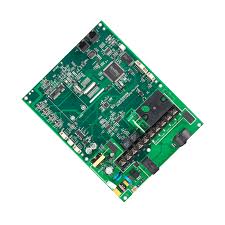
What role does soldering play in Printed circuit assembly services?
Furthermore, soldering contributes to the overall integrity and durability of printed circuit assemblies by protecting the electrical connections from environmental factors and contaminants. The solder forms a protective barrier around the component leads and PCB traces, shielding them from oxidation, corrosion, moisture, and other harmful agents that could compromise their performance or reliability. Proper soldering techniques, such as flux application and solder mask deposition, help to enhance the resistance of the solder joints to environmental stresses and ensure long-term reliability in diverse operating conditions.
In addition to providing electrical and mechanical connections, soldering enables the assembly of electronic components with varying sizes, shapes, and configurations onto PCBs with high precision and consistency. Surface mount technology (SMT), in particular, relies heavily on soldering techniques to mount miniature components onto the surface of the PCB, achieving high component density and compact form factors. Through-hole technology (THT) also utilizes soldering to secure larger components with leads inserted through holes drilled in the PCB, offering robust mechanical connections for heavy-duty applications.
Moreover, soldering techniques have evolved to accommodate the increasing complexity and miniaturization of electronic devices, with advancements such as reflow soldering, wave soldering, and selective soldering offering enhanced precision, efficiency, and reliability in printed circuit assembly services. Reflow soldering, for instance, uses controlled heating and cooling cycles to melt solder paste and create solder joints between surface mount components and PCBs, ensuring consistent soldering quality and minimizing defects. Wave soldering employs a molten wave of solder to solder through-hole components to the PCB in a single pass, streamlining the assembly process and reducing production costs.
In conclusion, soldering is a critical process in printed circuit assembly services, facilitating the creation of reliable electrical connections, mechanical support, and environmental protection for electronic components mounted onto PCBs. By leveraging soldering techniques and advancements, manufacturers can achieve high-quality, high-performance printed circuit assemblies that meet the demands of diverse applications in industries ranging from consumer electronics to aerospace and automotive. As technology continues to evolve, soldering will remain indispensable in enabling innovation and progress in the electronics manufacturing industry.